


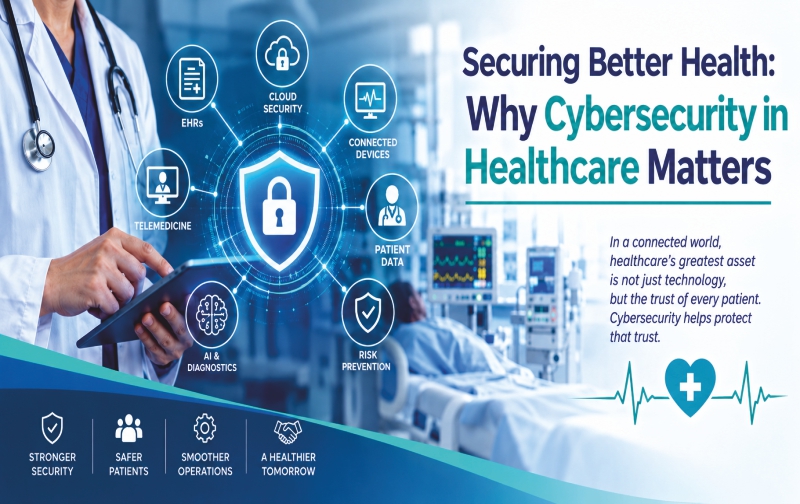
Healthcare is undergoing a digital transformation. Electronic health records (EHRs), telemedicine, connected medical devices and AI-powered diagnostics are making healthcare more efficient and accessible. However, this growing dependence on technology introduces a critical challenge: protecting the systems that safeguard human lives.
Beyond Data Theft: A Matter of Patient Safety
Healthcare organisations hold some of the most sensitive information imaginable, including medical histories, diagnostic reports, insurance details and personal identifiers. Unlike a compromised password, exposed medical information cannot simply be replaced.
The consequences of a cyberattack extend far beyond privacy. Ransomware can disrupt hospital operations, delay diagnostic procedures and restrict access to essential patient records. Connected medical devices, such as infusion pumps and patient-monitoring systems, also introduce potential vulnerabilities. In healthcare, a cybersecurity failure can become a patient-safety issue.
The Business Case for Cybersecurity
For hospitals, diagnostic laboratories, pharmaceutical companies and medical-device manufacturers, cybersecurity is no longer merely an IT expense. It is a business-critical investment.
A successful attack can trigger financial losses, operational downtime, reputational damage and regulatory complications. Healthcare organisations also depend on third-party software providers, cloud platforms and equipment vendors, making supply-chain security equally important.
As healthcare becomes increasingly interconnected, security must be considered throughout the technology lifecycle—from procurement and deployment to maintenance and eventual replacement.
Building a More Resilient Healthcare Ecosystem
A practical approach begins with strong access controls, multi-factor authentication, encryption, timely security updates and network segmentation. Regular backups, tested incident-response plans and employee awareness training are equally important.
Organisations should also maintain an inventory of connected medical devices, assess vendor security practices and establish clear procedures for operating safely during system outages. Security teams, clinicians, administrators and technology suppliers must work together to ensure that protective measures do not compromise essential clinical workflows.
Protecting Technology Means Protecting People
The future of healthcare will be increasingly digital, connected and intelligent. Its success, however, depends on more than innovation alone. Trust, resilience and patient safety must remain central to every technological advancement.
For healthcare leaders and technology providers, the message is clear: cybersecurity is not simply about protecting data; it is about protecting the continuity of care and the people who depend on
(Submitted by Arv Sharda Cybersecurity Student | VIT Chennai)it.